
I help founders understand their options clearly before they commit to any structure, provider, or direction.
Introduction: The Gateway to a Global Gold Marketplace
For centuries, gold has moved through the markets of the Middle East. Today, Dubai holds a significant position in global precious metals trade. If you are a trader, jewelry brand, refining expert, or investor looking to formalize your dealings, obtaining a gold trading license in Dubai provides formal entry into a major precious metals hub.
This guide is for serious market participants. The business of gold in Dubai operates on foundations of trust, compliance, and market understanding. It differs from generic import-export operations. The regulatory environment is comprehensive, designed to align with international standards while fostering trade. This process involves specific authorities, detailed documentation, and operational rules that require thorough understanding. We will navigate the critical choice between mainland and free zone, explain the compliance landscape, and provide transparent information on costs involved, helping you build your business on compliant foundations.
Understanding the Gold Trading License: Scope and Categories
A gold trading license authorizes you to commercially buy, sell, import, export, and hold physical gold. The specific activities you are permitted to conduct depend on the category of license you secure. Precise classification is an important first step.
Retail Gold & Jewelry Trading
This license allows you to operate showrooms, sell to end consumers, and manufacture or trade jewelry. It is typically required for businesses with direct customer-facing presence, whether in souks, malls, or retail locations. A retail license from the Dubai Department of Economy and Tourism (DET) is necessary for domestic sales.
Wholesale Gold & Precious Metals Trading
This covers B2B activities including trading in bullion (bars, ingots), coins, and rough or refined precious metals with other licensed entities, banks, and institutional investors. This is the core license for most international trading operations. It can be obtained on the mainland or, more commonly, within specialized free zones.
Gold Refining & Processing
This is a highly specialized industrial license. It permits operation of facilities for smelting, assaying, refining, and production of gold to internationally accepted standards. It requires significant capital investment, expert personnel, and separate approvals from environmental and industrial authorities.
Diamond & Colored Gemstone Trading
Often combined with gold, this is a distinct activity requiring specific approvals. In Dubai, this is primarily governed within the Dubai Multi Commodities Centre (DMCC), which operates a Diamond Exchange and regulatory framework for gemstones.
The Foundational Choice: Mainland Dubai vs. Free Zone
Your business model influences this critical decision. It determines your market access, clientele, and operational flexibility.
Mainland Dubai (DED/DET License)
A mainland company, licensed by the Dubai Department of Economy and Tourism, allows you to trade gold wholesale and retail directly within the UAE market. You can open retail outlets, supply local jewelry businesses, and engage directly with UAE-based buyers and sellers. Following current foreign ownership regulations, you can own this company entirely. The key requirement is physical office space and, for retail, retail space lease. This is typically the route for brands and traders whose primary focus is the domestic UAE consumer and B2B market.
Free Zone Establishment
Free zones offer 100% ownership, full profit repatriation, and streamlined setup. For gold trading, they provide significant advantages: bonded storage facilities, integrated logistics, and concentrated trading communities. However, the operational principle remains: free zone companies are licensed to operate within the zone and internationally. To sell gold directly to the local UAE market, you typically need to work through licensed mainland distribution arrangements. Therefore, free zones are often suitable for import/export businesses, international wholesale trading operations, and vaulting services that serve global clientele.
Why the Dubai Multi Commodities Centre (DMCC) Is Prominent
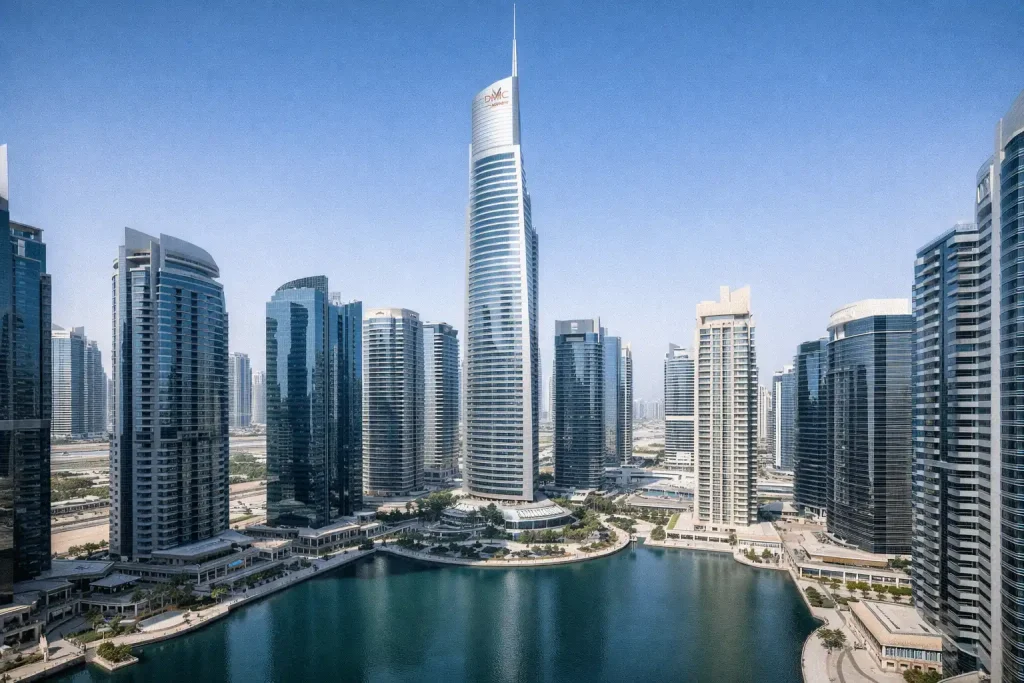
For gold trading, DMCC is a major specialized ecosystem. It handles substantial volumes of Dubai's physical gold flows. Choosing DMCC provides several advantages:
Regulatory Framework: DMCC has its own dedicated regulatory framework for commodities. Its compliance rules are recognized globally, adding operational credibility.
Integrated Infrastructure: It offers vaulting and storage facilities through specialized partners. This can simplify initial secure storage requirements.
Market Access: Members can access DMCC platforms including electronic registries for warehouse receipts, facilitating trade finance and ownership transfer.
Community: Being surrounded by other bullion banks, refiners, and traders creates networking and liquidity opportunities.
While other free zones like JAFZA also offer trading licenses, DMCC is purpose-built for commodities trading. For broader context on evaluating options, reviewing a comprehensive free zone comparison can be helpful.
The Step-by-Step Setup Process
The process combines standard company formation with commodity-specific due diligence. Thorough documentation and patience are important.
Phase 1: Preparation & Pre-Approval
Define Your Activity Precisely: Determine if you are retail, wholesale, or refining. Your application requires clear activity classification.
Develop a Business Profile: Prepare a comprehensive document outlining your trading experience, source of funds, intended sources of gold, and target markets. This forms the core of your compliance review.
Choose Your Jurisdiction: Decide between mainland (for local market focus) or a free zone like DMCC (for international focus).
Trade Name Reservation: Select and reserve a company name. Names related to "gold," "bullion," or "precious metals" undergo careful vetting.
Phase 2: Application & Due Diligence
Submit Initial Application: File your application with the DET or chosen free zone authority, including all shareholder and manager passports, CVs, and the business profile.
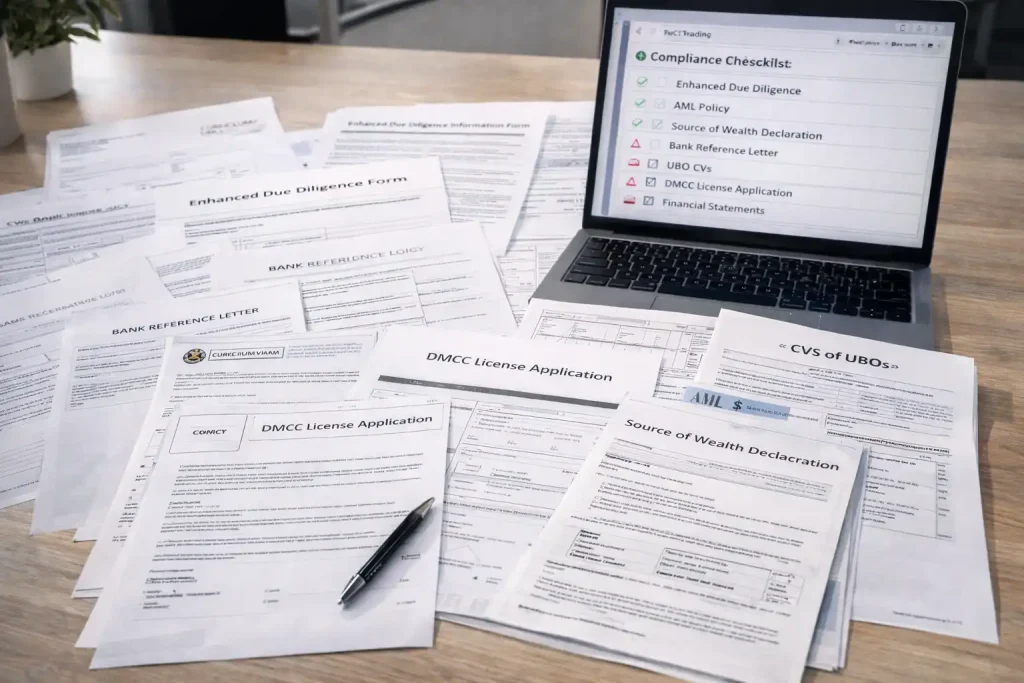
Enhanced Due Diligence (EDD) Process: This is a critical phase. The authority conducts thorough background checks on all ultimate beneficial owners (UBOs) and key managers. You will need to provide:
- Bank references and proof of source of wealth
- Detailed CVs demonstrating relevant industry experience
- Audited financial statements or personal net worth statements
Compliance Undertaking: You will be required to sign strict anti-money laundering (AML) and counter-financing of terrorism (CFT) policies, committing to ongoing compliance reporting.
Phase 3: Establishment & Licensing
Lease Approval: Secure office space (and retail space if mainland). In DMCC, you can also contract for storage space in vaults.
License Issuance: Upon successful due diligence and lease agreement, pay the fees and receive your commercial license.
Phase 4: Post-License Formalities

Corporate Bank Account Opening: Understanding UAE business banking requirements is important as this can be particularly challenging for trading companies. Banks conduct their own rigorous due diligence. Be prepared with a solid business plan, clear transaction flow explanations, and all due diligence documents from the licensing authority.
VAT Registration: Gold investment bullion (99.5%+ purity) is VAT zero-rated in the UAE, but other forms of gold (such as jewelry, lesser purity) are taxable. Understanding UAE VAT and accounting requirements is important. You must register for VAT if your taxable supplies exceed the mandatory threshold.
Industry Association Membership: For credibility, consider applying for membership in entities like the Dubai Gold & Jewellery Group or ensuring your refiners meet recognized standards.
Costs: A Realistic Investment Breakdown
Have questions about this?
A 10-minute call with Mirza often saves weeks of research. No obligation — ask anything about your situation.
Costs vary significantly based on location, scale, and whether retail space is required. The figures below are estimates for a wholesale trading setup. A retail operation will have substantially higher real estate costs. These figures are approximate and can vary based on specific requirements.
| Cost Component | Dubai Mainland (DED) | DMCC Free Zone | Notes |
|---|---|---|---|
| Government & License Fees | AED 25,000 - AED 40,000 | AED 20,000 - AED 35,000 | Includes trade name, license issuance, and annual renewal. DMCC fees often bundled in packages |
| Office Lease (Annual) | AED 70,000 - AED 120,000 | AED 50,000 - AED 90,000+ | Mainland requires physical office. DMCC offers flexi-desk to full offices |
| Storage/Vaulting Fees (Annual) | N/A (Arranged separately) | AED 15,000 - AED 60,000+ | DMCC vault access is available. Depends on volume and allocation size |
| Due Diligence & Compliance Fees | AED 5,000 - AED 10,000 | AED 10,000 - AED 20,000 | Covers enhanced background checks and processing |
| Professional Services Fees | AED 15,000 - AED 25,000 | AED 12,000 - AED 20,000 | For end-to-end application handling and document preparation |
| Estimated First-Year Setup Capital | AED 115,000 - AED 195,000 | AED 107,000 - AED 225,000+ | Excludes bank guarantees, inventory capital, and VAT registration |
For detailed cost planning specific to your situation, utilizing a business setup cost calculator can help estimate total investment requirements, though gold trading businesses typically require additional working capital for inventory.
Advantages and Strategic Benefits
- Strategic Hub Position: Access to markets across Asia, Africa, and Europe with established logistical connectivity through Dubai's airports and ports.
- Tax Environment: Understanding UAE corporate tax provisions is important. Favorable tax treatment exists for qualifying trading income in free zones, and VAT zero-rating applies to investment gold. Personal income remains tax-free.
- Physical Infrastructure: Access to established vaulting facilities, secure logistics, and assay services within integrated ecosystems like DMCC.
- Regulatory Framework: Operating under recognized frameworks like DMCC's provides operational credibility that can facilitate business with international counterparties.
- Market Liquidity: Being part of a concentrated trading community provides access to market liquidity and price discovery.
Challenges and Operational Realities
- Regulatory Scrutiny: Gold trading is a closely regulated sector. Expect detailed, ongoing scrutiny from licensing authorities, banks, and counterparties.
- Capital Requirements: Beyond setup costs, you need significant working capital to finance inventory. Profit margins can be modest, relying on volume.
- Banking Process: Opening and maintaining corporate bank accounts can be particularly challenging for trading companies. Enhanced due diligence requirements are standard.
- Market Volatility: Business performance is directly exposed to global gold price fluctuations, requiring effective risk management.
- Quality Assurance: The business depends heavily on supply chain integrity. Quality and authenticity verification is critical for reputation.
Common Mistakes and How to Avoid Them
Mistake 1: Underestimating the Due Diligence Process
Approaching this like a standard trading license is inadequate. Your background, experience, and source of funds will undergo thorough examination. Prepare comprehensive, verifiable business profile and documentation for all UBOs from the outset.
Mistake 2: Choosing the Wrong Jurisdiction for Your Model
Setting up a wholesale international trading firm on the mainland adds unnecessary complexity. Conversely, setting up a retail brand in a free zone will legally prevent you from selling directly to local customers. Align your structure to your primary revenue model.
Mistake 3: Neglecting the Storage & Logistics Plan
Your license approves you to trade, but storage arrangements are critical. Not having a secure, insured, and audit-ready storage solution pre-arranged can halt operations. In DMCC, this is integrated. Elsewhere, it requires separate procurement.
Mistake 4: Being Unprepared for Banking Onboarding
Approaching banks with minimal documentation typically fails. Prepare a detailed business plan, projected transaction flows (countries, volumes, counterparties), and the full due diligence package from your licensing authority. Consider engaging specialist consultants.
Mistake 5: Ignoring Quality Standards
If selling to the local market, items must carry approved hallmarks. If trading internationally, bars must meet LBMA or equivalent standards. Failure to adhere to quality protocols can result in goods seizure and license issues.
Who Might Consider Alternatives?
A dedicated gold trading license may not be necessary for:
- Online Precious Metals Platforms: If running a platform that facilitates trades but never takes custody of physical gold, you may operate under different financial technology licensing.
- Artisanal Jewelry Designers: Individual craftsmen making custom pieces might only need a DED Artisan License or freelance permit, not a full trading license.
- Investors Buying for Personal Portfolio: Individuals buying gold for personal investment can do so through licensed retailers without needing their own license.
- Consultants & Analysts: Providing market analysis, advisory services, or publishing research on gold prices requires a consultancy license, not a trading license.
Practical Use Cases and Scenarios
Case 1: The European Bullion Dealer Expanding East
An established UK-based bullion dealer wants to access Asian institutional demand and hold inventory in a strategically positioned hub.
Action: They establish a DMCC Free Zone Company. They use DMCC vault facilities for storage and clearing. They obtain a wholesale trading license, allowing them to import gold from Switzerland and sell to banks in Asia.
Case 2: The Jewelry Brand Launching in the GCC
An international jewelry brand wants to open retail locations in Dubai and other Gulf countries.
Action: They set up a mainland LLC with 100% ownership. They secure a retail gold & jewelry trading license from the DET. They lease retail space in major locations, ensuring all stock is properly hallmarked, and sell directly to consumers across the UAE.
Case 3: The Experienced Investor Starting a Trading Desk
A private investor with extensive personal gold trading experience wants to formalize their activity and build a business.
Action: They form a trading company in DMCC. Their business profile emphasizes their personal track record and clear sources of wealth. They start with a focused wholesale license, using DMCC vault facilities, and aim to trade with a network of trusted counterparties.
Taking Your Next Steps
Begin with internal clarity. Define your primary business: Are you a retailer, a wholesaler, or a refiner? Who is your first target customer? The answer influences your jurisdiction choice.
Next, prepare your documentary foundation. Gather CVs, bank statements, and reference letters that demonstrate your legitimacy and experience in the commodity sector. Draft a clear, comprehensive business profile.
Then, make direct inquiries. If DMCC is your likely path, contact their business development team. If mainland retail is your goal, consult with a corporate service provider specializing in DET retail licenses. Be prepared to discuss your model openly.
Finally, engage a compliance expert or corporate services firm with demonstrated experience in precious metals. The regulations are detailed, and the cost of errors is high. Your license represents a commitment to operating with integrity in a market built on trust and compliance. Your preparation should reflect that from the very first step.
Ready to take action?
Whether you're ready to start or still comparing options — we'll give you a straight answer.
Chat on WhatsApp
Usually replies within 2h
Get a Free Quote
Personalised in 60 seconds
Call Directly
Sat–Thu, 9am–7pm UAE
About the Author
Dubai-based independent advisor on UAE visa, immigration, and offshore structuring. Founder of Henry Club UAE with 90+ published guides. Advisory-first — clarity before commitment.